Wednesday, 13 November 2013

Burntisland to Kinghorn 07.11.13


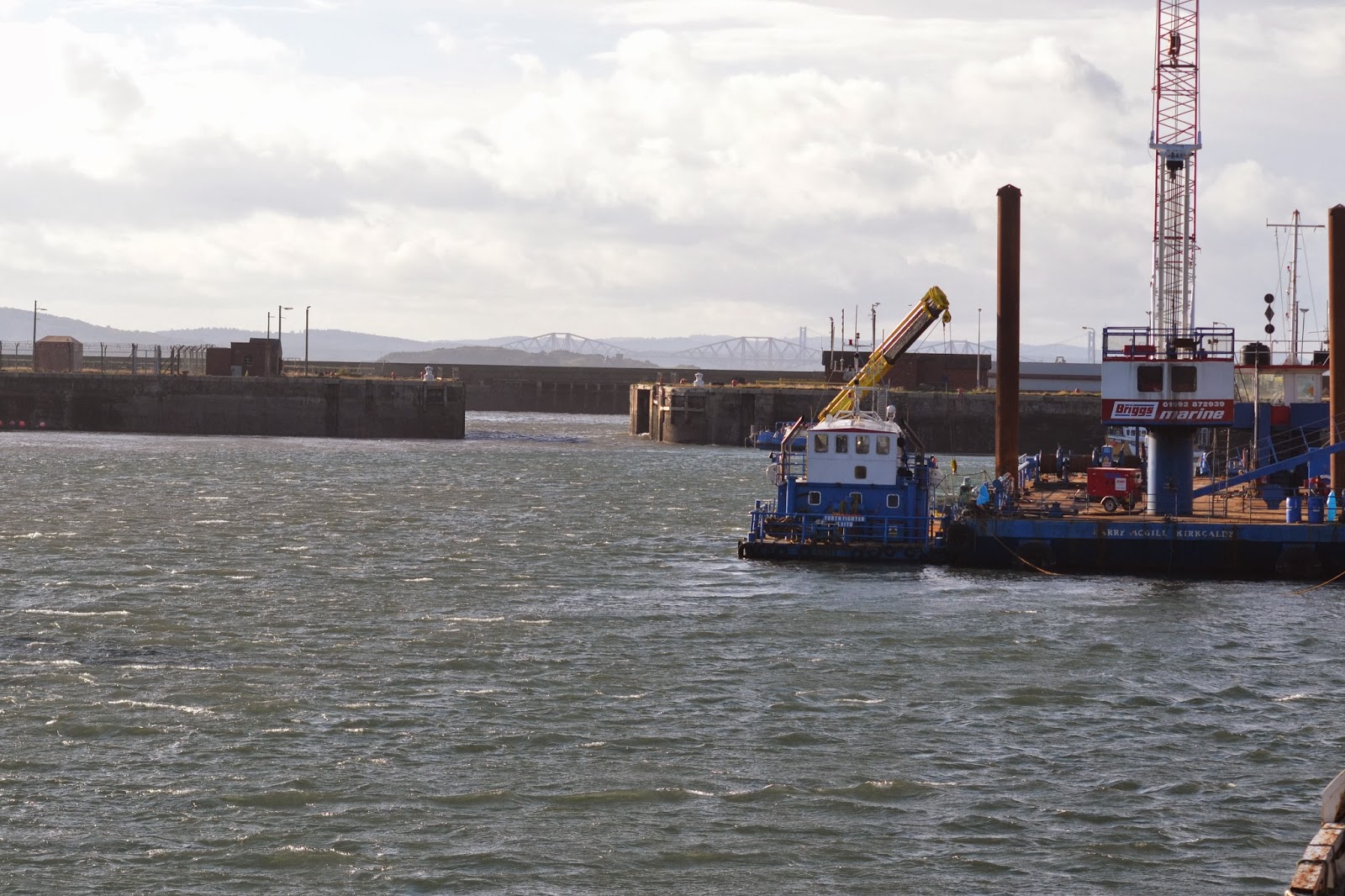
Today the group got a bus to Burntisland for a walk to Kinghorn, first we headed along the coast.

The earliest historical record of the town of Burntisland was in the 12th century, when the monks of Dunfermline Abbey owned the harbour and neighbouring lands. The settlement was known as Wester Kinghorn and developed as a fishing hamlet to provide food for the inhabinants of Rossend Castle.



After a few miles we headed in land along the Creigencalt link path to Kinghorn Loch.


We arrived at Kinghorn loch we stopped for lunch at a very nice place called Earthship that is an Ecology Centre.

The Earthship Fife Visitor Centre overlooks Kinghorn Loch, (at a site shared with Craigencalt Ecology Centre), where it serves as an educational and research building. SCI is running an on-going monitoring programme to assess an Earthship's performance in Scotland's climate.


We when left Kinghorn on a bus home.

The historic former Royal Burgh of Kinghorn lies on the coastline of the Kingdom of Fife. The former castle in Kinghorn was frequently visited by the Scottish Court in the period of the House of Dunkeld.


 It was a great day the weather was nice sunny day with a strong cold wind. A great day was had by all. 

Wednesday, 6 November 2013

Clatto Park to Templeton 04.11.13

On the 4th of November the Monday walking group got on a bus to Clatto Park where we set off for a walk around Clatto Reservoir, it was a nice day and the sun was out.

Originally created as part of Dundee’s public water supply in 1874, the reservoir is no longer connected to the supply network. The deepest point is approximately 8 metres, and the levels are now dependant on rainfall.


We then set off for Templeton Woods. This was a nice walk as the sun was shining and the leaves were nice to see at this time of the year.

There are a surprising number of permanent residents in the woods, who you may be lucky enough to spot.

These include roe deer that graze the forest and are most easily spotted at dawn and dusk. Buzzards nest in the woods and can often be heard calling to their mates as they soar above the tree tops.

Jays are the beautifully coloured members of the crow family, whose harsh screech can often be heard in the car park. Keep your eyes peeled though, as they are very secretive birds.

Red squirrels are found throughout the wood, making Dundee one of the few cities in Britain to be a home to these cute tree-dwelling mammals. They can be seen scampering around and jumping through the trees in search of food.


We then headed to Birkhill for a coffee and a bite to eat in the Birkie Inn

This busy country inn, dating back to 1870, lies just to the north of Dundee in the village of Birkhill.

Tuesday, 5 November 2013

Piperdam to Longforgan 31.10.13


On Thursday the 31.10.13 the Thursday walking group got on a bus to Piperdam for a walk to Longforgan.

Piperdam is an award winning Golf & Leisure Resort just 5 miles from Dundee, nestling in the Angus Hills by Fowlis.


We left Piperdam heading for Balruddery Farm. Balruddery Farm is run by the James Hutton Institute (previously known as the Scottish Crop Research Institute) whose headquarters are in nearby Invergowrie.


We then headed for Rossie Estate.

Rossie Priory is a country house and estate to the north of Inchture, near the hamlets of Baledgarno and Knapp, Perthshire, Scotland. It lies 9.6 miles by road west of the city centre of Dundee.

Rossie Priory was designed by the architect William Atkinson in Regency Gothic Style. It was built as a house (never actually a priory) in 1817 for Charles Kinnaird, 8th Lord Kinnaird and is the seat of the Kinnaird family. The large estate is roughly 2000 acres.


We then walked back to Longforgan. What started off as a dull and cloudy day turned out to be a nice sunny day.


A great walk was had by all.


Tayport & Tentsmuir 24.10.13

 On Thursday the 24.10.13 the Thursday walking group got on a bus to Tayport for a walk to Tentsmuir Forest.

Tayport lies close to the north east tip of Fife. To the north it looks across the River Tay to Broughty Ferry and Broughty Castle. To the east is the vast Tentsmuir Nature Reserve, an area of forested dunes measuring some 3 km from east to west and 6 km from north to south and edged by wide sands that continue all the way round to the mouth of the River Eden.


The walk through Tentsmuir Forest is very nice at this time of the year with the change in season.

 Tentsmuir Forest and Tentsmuir National Nature Reserve are in north east Fife, Scotland. Covering some 50 square miles, the forest was originally sand dunes and moorland before acquisition by the Forestry Commission in the 1920s. The forest consists mainly of Scots Pine and Corsican Pine.


 We then walked to Morton Loch, which has a variety of nice bird hides.

The surrounding woodland of Morton Lochs and Tentsmuir are an important habitat for the red squirrel, which can often be seen right outside the John Berry hide. Bird feeders are placed around the woodland and outside the John Berry hides and attract a range of tits, finches and Great Spotted Woodpecker.


 We then walked back to Tayport and went for a coffee at the Bell Rock Tavern.

 The Bell Rock Tavern is an historic hostelry, serving the community and visitors since 1871. Named after the Bell Rock Light House.


We then walked back to Dundee.  A great time was had by all.


Friday, 25 October 2013

Newtyle 17.10.13


On Thursday the 17.10.13 the Thursday walking group got on a bus to Newtyle for a walk.

Newtyle is a village in the west of Angus, Scotland. It lies 11 miles to the north of Dundee in the south west of Strathmore, between Hatton Hill and Newtyle (Heather Hill) in the Sidlaws.


After we got off the bus we walked up to the Pictish stone where we saw some great views.

The earliest history of the general area demonstrates that Pictish peoples inhabited the area. For example, discovery of the Eassie Stone in this region indicates sophisticated Pictish carvers who embraced Christianity about the year 600 AD.


Then we walked back to Newtyle along the old Railway

Newtyle was the northern terminus for the first commercial railway in Scotland, the Dundee and Newtyle Railway which opened in 1832.


The lands we were walking on were given to Sir William Olifard (8th chief) in 1317 by Robert the Bruce. Robert the Bruce's daughter, Elizabeth, married Sir William Olifard's son, Sir Walter Olifard, who also inherited the Newtyle estate.